Nature thrived during the Covid-19 pandemic, cleaning up the environment in all three spheres of air, land and sea. A fall in emissions of carbon dioxide (CO2), the planet-heating gas, and other air pollutants gave us smog-free skies. The decline in air pollution was also benefitted by the bees since their ability to smell flowers at a distance can be disrupted by air pollution. The empty canals of usually tourist-clogged Venice, Italy, were filled with crystal clear waters due to the absence of boats which usually churn sediment to the surface. The global travel restrictions for humans created a dramatic impact on animals that live in the wild, giving them the confidence to wander into empty streets and highways and to enjoy nature reserves and parks all to themselves. The streets that were usually crowded with people and vehicles became deserted allowing animals to roam free, while humans were indoors. This considerable global slowing of modern human activities, notably travel, has been coined “anthropause” by researchers at The Max Planck Society for the Advancement of Science in Germany.
Human-animal interface
The SARS-CoV-2 (COVID-19 virus) is a novel strain of coronaviruses discovered in late 2019. Animals are rarely affected with coronaviruses and usually recover after showing mild symptoms. A zoonosis or a zoonotic disease is an infection caused by bacterial, viral or parasitic pathogens or from unconventional agents that has jumped from a non-human animal to humans, which can spread between animals and people through direct contact or through food, water or the environment. They represent a major public health problem around the world due to our close relationship with animals in agriculture, as companions and in the natural environment. Based on the information available to date, the WHO (World Health Organization) and the CDC (Centers for Disease Control and Prevention, in USA) reported the risk of animals spreading COVID-19 virus to people is low, but the virus can spread from people to animals, mostly from close contact. A small number of pets worldwide, including cats and dogs, have been reported to have been exposed to COVID-19 virus, from close contact with infected people, as evidenced by the presence of antibodies for the coronavirus in their blood. Large cats and minks raised in farms, have tested positive for COVID-19 virus following contact with infected humans. Nadia and six other tigers at the Bronx Zoo in New York, USA that tested positive for the coronavirus, was believed to have got infected from an asymptomatic zoo keeper. In March 2020 when New York City was a global epicenter for SARS-CoV-2 infections, respiratory secretions and/or feces from four tigers (Panthera tigris) and three lions (Panthera leo) in the Bronx Zoo, NY developed mild abnormal respiratory signs and tested positive for SARS-CoV-2 RNA while the live virus in a few (McAloose et al. 2020). Nine whole SARS-CoV-2 genomes were identified from were identified from the animals and keepers, while different SARS-CoV-2 genotypes were identified from the lions and tigers. The epidemiologic and genomic data indicated human-to-tiger transmission, which were the first confirmed cases of natural SARS-CoV-2 infections in non-domestic species in the world.
Therefore, it is recommended that SARS-CoV-2 infected persons should isolate from people as well as animals. The Corbett Tiger Reserve in Uttarakhand, India set up quarantine wards for tigers and elephants, with video cameras installed to observe any abnormal behavior which might suggest they have contracted the Covid-19 Contagion.
The COVID-19 pandemic has highlighted the longstanding need of a sustainable “One Health” collaboration. The OIE (World Organization for Animal Health, formerly the Office International des Epizooties), an intergovernmental organization coordinating, supporting and promoting animal disease control, has established an ‘Incident Management System’ to coordinate with partners such as the WHO to better understand the emergence of COVID-19 virus and to enhance the capacity of countries to respond to this multifaceted crisis. The Food and Agriculture Organization of the UN (FAO), the OIE, and the WHO launched a Tripartite Zoonoses Guide (TZG) entitled ‘Taking a Multisectoral, One Health Approach: A Tripartite Guide to Address Zoonotic Diseases in Countries’, which provides principles, best practices and options to assist countries in achieving sustainable and functional collaboration at the human-animal-environment interface.
Behavioral changes
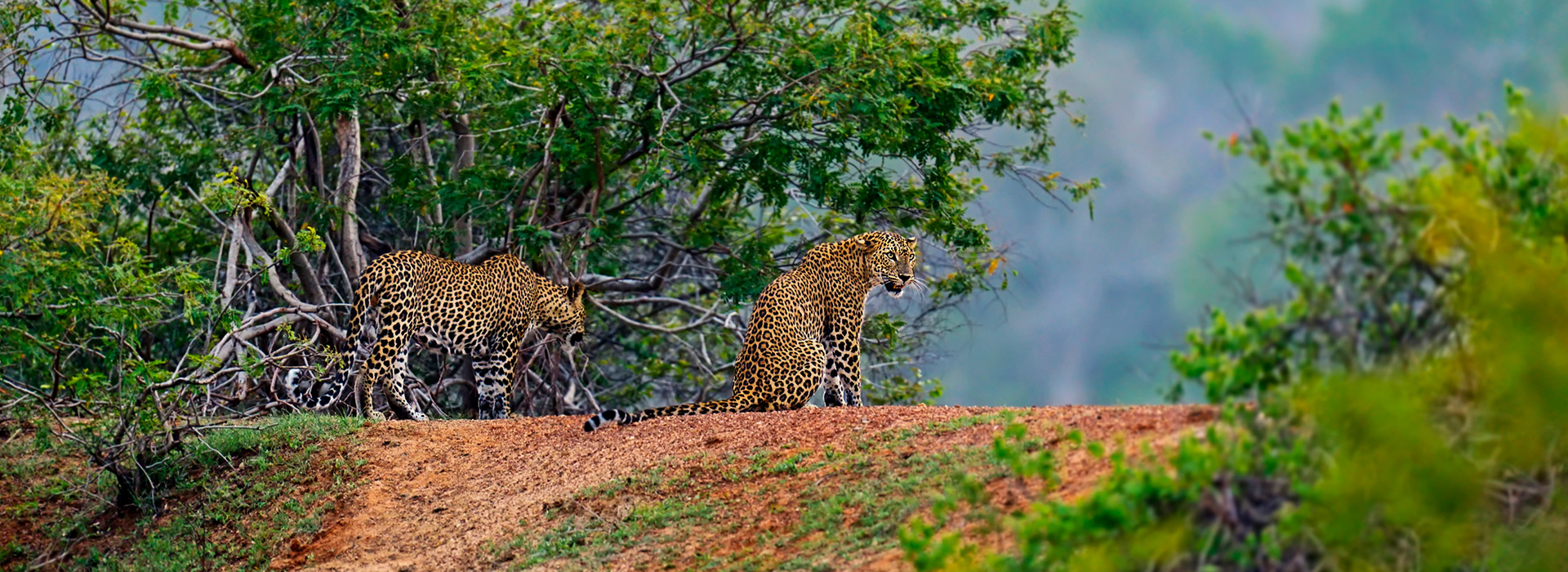
The freedom during the lockdown was mostly enjoyed by wild animals in national parks globally. Wild animals were seen “running wild” in urban areas enjoying their new-found roaming ranges. A leopard relaxing on the roadside leading up to Wilpattu National Park in Sri Lanka had been captured on camera. Pumas have been spotted prowling the streets of Santiago, Chile. A herd of Kashmir goats invaded the streets in Llandudno, a Welsh seaside resort, helping themselves to garden flowers and hedges. Wild boars strolled through the deserted streets of Barcelona in Spain. Coyotes were seen walking down San Francisco streets. Hedgehogs were enjoying vehicle-free roads in the UK. Herds of deer were roaming the silent streets nearby Japan’s tranquil Nara Park and also in the streets of Haridwar in Nothern India. Pythons and other snakes were seen freely slithering across. Jackals were seen in broad daylight in urban parks in Tel Aviv, Israel. Giant anteaters were seen crossing a busy highway in Brazil. Dolphins were confidentially swimming near the banks of the Bosphorus, the natural narrow waterway in Turkey, which was one of the world’s busiest marine routes. A herd of 30 Dugongs, also known as sea cows, was seen swimming in the Hat Chao Mai National Park in Thailand.
Animals in wildlife parks appeared relaxed and moved freely within the parks, since their movements were not blocked by heavy vehicle traffic which forced them to take alternative routes. However, the sense of less noise and search for new places to find food had led to some animals getting lost, such as a puma which was found inside an apartment complex.
Change in behavior was seen in animals in zoos and aquariums across the globe that were closed as part of lockdown procedure. Some zoos allowed their animals to roam around freely. Penguins at Shedd Aquarium in Chicago, USA were seen wandering along silent corridors and gazing at exhibits. Some social animals, such as primates, parrots and meer cats who were accustomed to get enrichment from viewing and engaging with visitors, had turned up for their daily “meet the public” appearances, despite the fact there was nobody there to watch them. Keepers in some zoos had spent as much time as possible with the animals providing them with “enrichment activities”.
Meanwhile, some animals had forgotten about humans and were seen hiding whenever a zoo keeper approach their enclosure. Those animals born during the COVID-19 lockdown will not have experienced life in the public eye and zoo keepers will have to help their transition back to regular lifestyle. When the visiting hours are restored, it will be interesting to see whether the captive animals will be desperate for public attention or have adapted to a quieter life?
On the bright side, the lock-down had provided opportunities for wild animals to expand their populations. Some animals took advantage of the new-found privacy and exercised natural breeding resulting in unexpected benefits, such as in the case of Ying Ying the resident Panda in Ocean Park in Hong Kong, who is suspected to be pregnant after 10 years of unsuccessful attempts. At Dehiwela zoo black swans and white peacocks have laid eggs and hatched for the first time during the lock down. In Albania the numbers of pink flamingos had increased by a third. A massive spike was seen in the number of baby Olive Ridley sea turtles in the empty beaches of India. The Loggerhead Marine life Center in Florida noted an increase in the rate of egg laying from 50% to 61% by female loggerhead turtles at the shores during the beach closures, due to absence of disturbances from people, dogs, bright lights, and other dangers.
The negative impact of reduced human presence
Closed nature reserves raised the possibility of vital habitats overtaken by invasive species. Movement of people within the parks is a deterrent to poachers and therefore, endangered species were potentially at increased risk of poaching and wildlife trafficking due to closure of wild life parks. The Department of Wildlife Conservation in Sri Lanka enhanced its anti-poaching activities and deployed wildlife field officers for anti-poaching activities. Sadly, a wildlife officer on duty was shot dead by a group of hunters inside Gal Oya National Park on April 23rd 2020.
The sudden unemployment and the working communities moving back to their family homes during the lockdown may have resulted in unexpected increase in the number of occupants in households resulting in food shortages, which in turn, may have led to illegal hunting of wild animals in villages bordering wildlife parks. The spotted deer, boars and porcupines were the most poached animals. Snares set up for boars, porcupines, etc. led to other animals getting caught as in the case of endangered black panthers in recent times, who were innocent victims. In Africa, animals were hunted not only for bushmeat but also for other commodities, such as rhino horns. The Mayurjharna Elephant Reserve, West Bengal, India, reported the first instance of illegal poaching for ivory. There was concern that similar incidents could further impact a species already listed as endangered.
The pandemic created new challenges for urban-dwelling animals too, who normally got fed or picked morsels of food on the streets, such as rats, pigeons, gulls or monkeys, were risking starvation. A Red kite (a medium-large bird of prey in the family Accipitridae, similar to an eagle, “Rathu Piyakussa” in Sinhala) was seen in the Meltham Wildlife Reserve in West Yorkshire, both underweight and incapable of feeding itself. Rival gangs of monkeys were seen fighting over food in Lopburi, Thailand. Homeless dogs and cats suffered due to food shortage resulting from closed restaurants, one of their main food sources. In Sri Lanka, many concerned public, the Police and the military fed not only home-less people but also the stray animals in urban and remote areas, during the lock-down. Shelters for dogs and cats were under threat of being relinquished because of the economic situation and also overpopulation as adoption programs were interrupted due to travel restrictions.
Asian elephants more regularly explore human spaces, in search of food. Rambo and a herd of about 20 elephants in Udawalawe National Park had a habit of halting safari jeeps seeking food from people. Elephants along the Buttala-Wellawaya road near the Yala park boundary were also used to be fed by the public. Such habits created by visitors had abruptly stopped due to the closing of the Parks during the pandemic. Solitary elephants such as Gemunu, Nandimithra and Arjuna at Yala National Park who had developed a taste for food offered by visitors, in spite of repeated warnings not to feed wild animals, may attempt to expand their territories which could result in potentially fatal consequences.
Certain animals require large quantities of food which was difficult to gather during the lock-down, and enclosures for tropical animals in temperate countries needed heating and temperature maintenance, etc. Due to the fall in revenue from gate collections, zoos that were not funded by states were appealing for public donations and government aid for daily maintenance of their animals. As a last resort for survival, a zoo in Germany has even listed the animals they have to slaughter to be fed to others. In contrast, our own National Zoological Gardens had functioned as an essential service, and feed supplies too had continued unhindered during the lock-down.
Conservation Research opportunities
Many conservation projects around the world are either on-hold or have slowed down due to less funding availability, international travel bans and border restrictions. There is genuine concern that wildlife already on the brink of extinction is now at even greater risk of being lost due to cut down in crucial sources of funding for conservation work. On the other hand, unique scientific opportunities have arisen to study how the decline in tourism is affecting wildlife at popular destinations, such as national parks and marine reserves. The drop in vehicular traffic during the lock-down contributed to a decrease in road-kills. A 58% drop in fatal collisions with deer, elk, moose, bears, mountain lions, and other large wild animals, as well as domestic animals such as dogs, sheep has been recorded in the USA. An international consortium, “COVID-19 Bio-Logging Initiative” was formed to study the extent to which human mobility affects the movements, behaviour and stress levels of wildlife, before, during and after Covid-19 lockdown using data collected with animal-attached electronic devices called “bio-loggers”. Their findings will inspire innovative proposals to improve human-wildlife coexistence, and may discover that minor changes to our lifestyles and transport networks can potentially have significant benefits for both ecosystems and humans.
In the Bahamas, researchers are examining how the absence of tourists is affecting the diet and health of rock iguanas, which got fed routinely by visitors, which had helped boost their population. Researchers are assessing the iguana population numbers, weight of the animals, and checking their blood and gut microbiota, in order to better manage tourists once they return. Lack of tourists in waterfront hotels could help prevent the reefs from polluted wastewater, which stimulates algae growth. International Quiet Ocean Experiment (IQOE) is assessing the quieter background “soundscape” of the ocean, in which animals evolved their communication strategies, caused by modification of international ship traffic. There is evidence that whales prefer the ocean with less shipping noise.
Coordinated global wildlife research during periods of crisis will provide unforeseen opportunities for humans to forge a mutually beneficial coexistence with other species. The Guardian Newspaper of 30 June 2020 wrote
“We’ve never had a better chance to make a greener world. Covid-19 has delivered unusual environmental benefits: cleaner air, lower carbon emissions, a respite for wildlife. Now the big question is whether we can capitalize on this moment.”
The author is a pioneer YZA member (1972-). She may be contacted at indiradush@gmail.com for clarifications or suggestions. The above information was collected from WHO, CDC, & OIE Reports, the World Wide Web, scientific literature, and personal knowledge.
- https://www.who.int/news-room/fact-sheets/detail/zoonoses#:~:text=A%20zoonosis%20is%20any%20disease,from%20vertebrate%20animals%20to%20humans
- https://www.cdc.gov/coronavirus/2019-ncov/daily-life-coping/animals.html
- Christian Rutz, Matthias-Claudio Loretto, Amanda Bates, Sarah C. Davidson, Carlos M. Duarte, Walter Jetz, Mark Johnson, Akiko Kato, Roland Kays, Thomas Mueller, Richard B. Primack, Yan Ropert-Coudert, Marlee Tucker, Martin Wikelski and Francesca Cagnacci. COVID-19 lockdown allows researchers to quantify the effects of human activity on wildlife. Nature Ecology & Evolution; 22 June, 2020.
- The pandemic stilled human activity. What did this ‘anthropause’ mean for wildlife? By Erik StokstadAug. 13, 2020. https://www.sciencemag.org/news/2020/08/pandemic-stilled-human-activity-what-did-anthropause-mean-wildlife
- https://www.newscientist.com/article/2244359-which-animals-are-benefitting-from-coronavirus-lockdowns/#ixzz6uwF8yNWM
- McAloose D, Laverack M, Wang L, Killian ML, Caserta LC, Yuan F, Mitchell PK,Queen K, Mauldin MR, Cronk BD, Bartlett SL, Sykes JM, Zec S, Stokol T, Ingerman K, Delaney MA, Fredrickson R, Ivancˇic´ M, Jenkins-Moore M, Mozingo K, Franzen K, Bergeson NH, Goodman L, Wang H, Fang Y, Olmstead C, McCann C, Thomas P, Goodrich E, Elvinger F, Smith DC, Tong S, Slavinski S, Calle PP, Terio K, Torchetti MK, Diel DG. (2020). From people to Panthera: natural SARS-CoV-2 infection in tigers and lions at the Bronx Zoo.
By: Professor Emeritus Indira Nanayakkara Silva PhD, FSLCVS, BVSc (indiradush@gmail.com)
(This article was published in the YZA journal “Panividaya”)